In stock
Research use only

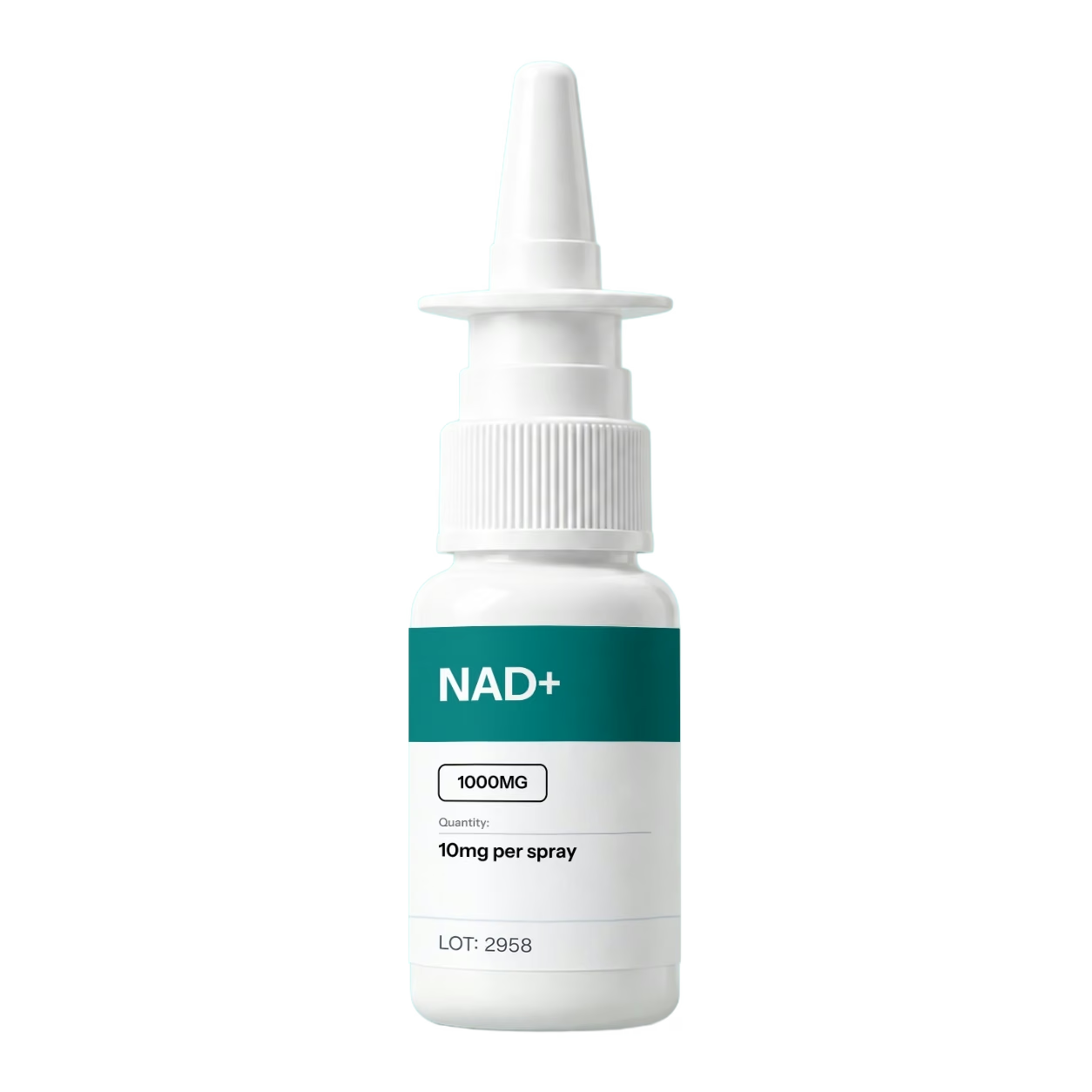
NAD+

Nicotinamide adenine dinucleotide

Nicotinamide adenine dinucleotide (NAD+) supplied in solution in a spray bottle for in-vitro and preclinical research, including intranasal-route studies.

$49.99

Per 5 mg vial · excl. VAT · volume pricing from 5 units

Ships within 24 hours

Cold-packed from Leiden, tracked across the EU and UK.

Documentation included

HPLC and mass-spec tested. Batch CoAs coming soon.

Lot traceable

Every vial maps to a signed batch release record.

Specification

Compound monograph — NAD+

NAD+ spray provides nicotinamide adenine dinucleotide in solution in a spray bottle, for laboratories studying NAD+ biology and non-injected delivery routes. In rat models, intranasal NAD+ raised brain NAD+ content and was studied after transient focal ischemia and traumatic brain injury, work built on evidence that excessive PARP-1 activation depletes cellular NAD+. NAD+ is also a cosubstrate for sirtuins and CD38, and its role in neuronal stress resistance and brain aging has been reviewed. Research Market supplies each lot with identity and purity data on its certificate of analysis. It is sold strictly for laboratory research use.

Chemical structure and identification

  • Molecular formula: C21H27N7O14P2
  • Molecular weight: 663.4 g/mol
  • CAS number: 53-84-9
  • PubChem CID: 5892
  • Form: Supplied in solution in a spray bottle

Research applications

  • Intranasal delivery after ischemia: In a rat model of transient focal ischemia, intranasal NAD+ increased brain NAD+ content and was associated with smaller infarcts and fewer neurological deficits, while intranasal nicotinamide was not [1]
  • Traumatic brain injury: In a rat weight-drop model, intranasal NAD+ given immediately after injury protected hippocampal CA1, CA3 and dentate gyrus neurons, but not cortical neurons, and reduced delayed microglial activation [2]
  • Brain aging and neurodegeneration: Reviewed NAD+-dependent enzymes in synaptic plasticity and neuronal stress resistance, and its role in processes of Alzheimer’s, Parkinson’s and Huntington diseases and ALS [3]
  • NAD+ metabolism: Reviewed NAD+ as a redox coenzyme and cofactor for sirtuins, CD38 and PARPs, and its gradual decline with age in rodents and humans [4]

Reference citations

  1. Ying W. et al. (2007). Intranasal administration with NAD+ profoundly decreases brain injury in a rat model of transient focal ischemia. Front Biosci, 12:2728–2734. PMID 17127275 · DOI
  2. Won S.J. et al. (2012). Prevention of traumatic brain injury-induced neuron death by intranasal delivery of nicotinamide adenine dinucleotide. J Neurotrauma, 29(7):1401–1409. PMID 22352983 · DOI
  3. Lautrup S. et al. (2019). NAD+ in brain aging and neurodegenerative disorders. Cell Metab, 30(4):630–655. PMID 31577933 · DOI
  4. Covarrubias A.J. et al. (2021). NAD+ metabolism and its roles in cellular processes during ageing. Nat Rev Mol Cell Biol, 22(2):119–141. PMID 33353981 · DOI

Compound data from PubChem CID 5892. Literature summaries describe published preclinical research and are not claims about this product’s effects in humans or animals.

Important regulatory notice

This product is supplied for laboratory research use only. It is not a medicinal product, is not intended for human or veterinary consumption, diagnostic use or any therapeutic application, and has not been evaluated or approved by the EMA, the FDA or any other regulatory authority. Purchase is restricted to qualified research professionals working in appropriately equipped facilities. The purchaser is responsible for ensuring compliance with all applicable national and institutional rules governing the acquisition, handling, storage and disposal of this material.

Research use only — not for human or veterinary consumption, and not a medicinal product.

Bulk & multi-site

Need 5 g or more? We quote per lot.

Volume pricing and custom fill sizes. Batch CoAs coming soon.

Search the Catalogue

Search by compound name, CAS number or SKU.