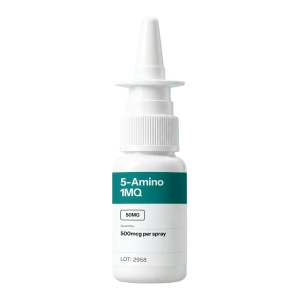
In stock
Research use only

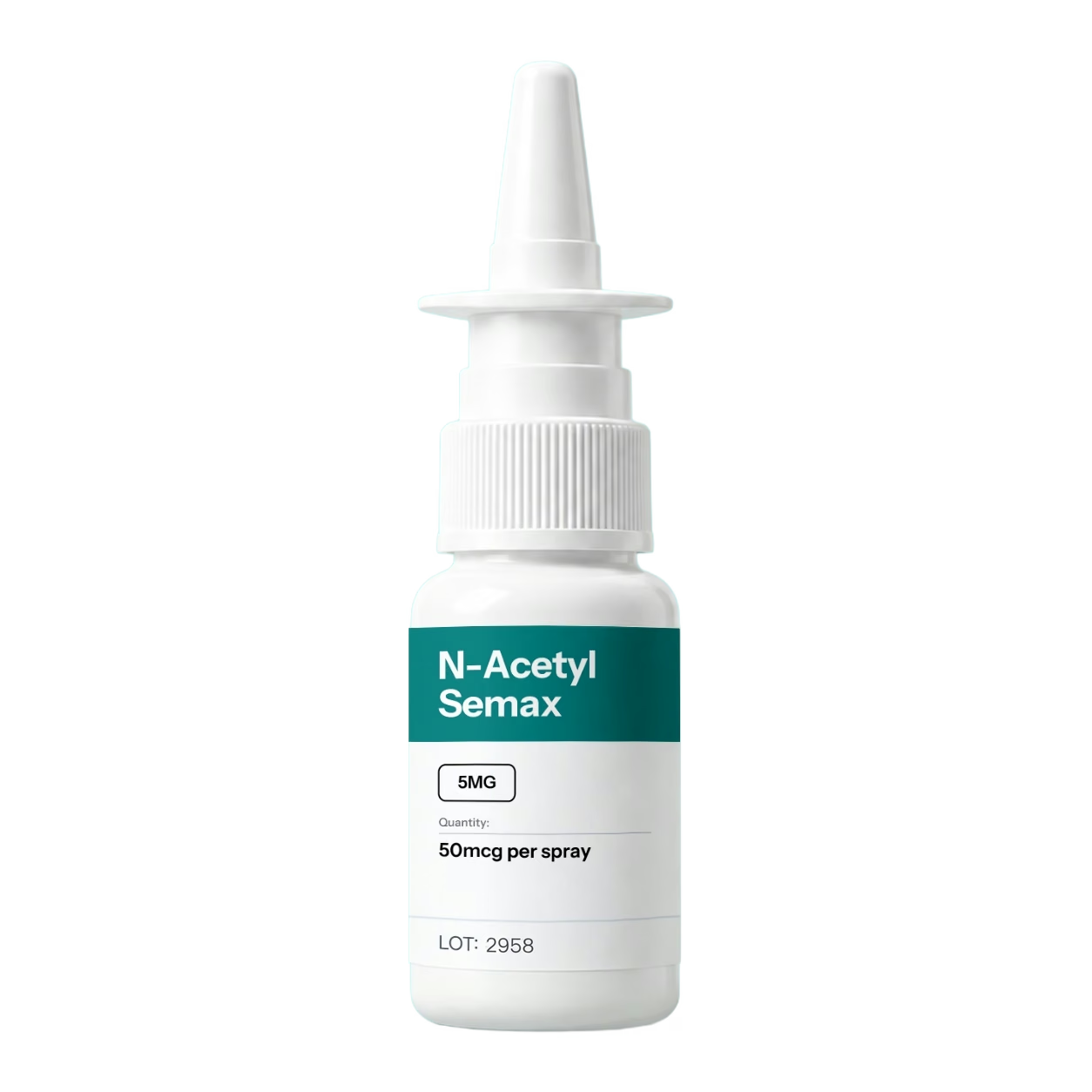
N-Acetyl-Semax

N-acetylated ACTH(4-7)-Pro-Gly-Pro analog

An N-terminally acetylated analog of the heptapeptide Semax (Met-Glu-His-Phe-Pro-Gly-Pro). Supplied in solution in a spray bottle for in-vitro and preclinical research.

$49.99

Per 5 mg vial · excl. VAT · volume pricing from 5 units

Ships within 24 hours

Cold-packed from Leiden, tracked across the EU and UK.

Documentation included

HPLC and mass-spec tested. Batch CoAs coming soon.

Lot traceable

Every vial maps to a signed batch release record.

Specification

Compound monograph — N-Acetyl-Semax

N-Acetyl-Semax is Semax, the ACTH(4-7)-Pro-Gly-Pro heptapeptide, with its N-terminal amino group acetylated. That single change alters how the peptide binds copper(II), and researchers have compared the two forms directly in neuroblastoma cells. Most route-of-delivery work, including brain uptake after intranasal application and breakdown by nasal mucus enzymes, was carried out with unmodified Semax. Research Market supplies this N-Acetyl-Semax spray in solution in a spray bottle, with a lot-specific certificate of analysis, for laboratories working with nasal-route research models. It is sold strictly for laboratory research use.

Chemical structure and identification

  • Parent peptide: Semax, CAS 80714-61-0, PubChem CID 9811102
  • Parent sequence: Met-Glu-His-Phe-Pro-Gly-Pro (MEHFPGP)
  • Modification: Acetylation of the N-terminal amino group (Ac-Semax)
  • Form: Supplied in solution in a spray bottle
  • Analytical methods: RP-HPLC for purity and mass spectrometry for identity, reported on the batch certificate of analysis

Research applications

  • Effect of N-terminal acetylation: Acetylation changed the main Cu(II) complex of Semax from a CuN4 to a distorted CuN3O chromophore; unlike Semax, Ac-Semax did not protect SH-SY5Y neuroblastoma cells from Cu(II) toxicity, while Zn(II) binding and cellular Zn(II) influx were comparable [1]
  • Intranasal brain uptake (parent peptide): With tritium-labeled Semax given intranasally to rats, 0.093% of the administered radioactivity per gram was found in brain at 2 minutes, 80% of it as intact peptide, with Pro-Gly-Pro the main metabolite [2]
  • Breakdown by nasal mucus enzymes: Semax and the glyprolines Pro-Gly-Pro-Leu, Pro-Gly-Pro-Gly and Pro-Gly-Pro were exposed to leucine aminopeptidase and to enzymes from nasal mucus, brain membranes and rat blood; the glyprolines were considerably more stable, and Semax was cleaved to His-Phe-Pro-Gly-Pro [3]
  • Route comparison: In rats, intranasal Semax improved passive avoidance learning more than intraperitoneal Semax, but changed pain sensitivity in the Randall-Selitto test only by the intraperitoneal route [4]
  • Ischemia-reperfusion transcriptome: RNA-Seq of rat brain 24 hours after transient middle cerebral artery occlusion found 394 genes differentially expressed with Semax versus saline, with inflammation-related genes suppressed and neurotransmission-related genes activated [5]

Reference citations

  1. Magrì A. et al. (2016). Influence of the N-terminus acetylation of Semax, a synthetic analog of ACTH(4-10), on copper(II) and zinc(II) coordination and biological properties. J Inorg Biochem, 164:59–69. PMID 27586814 · DOI
  2. Shevchenko K.V. et al. (2006). [Kinetics of Semax penetration into the brain and blood of rats after its intranasal administration]. Bioorg Khim, 32(1):64–70. PMID 16523722 · DOI
  3. Shevchenko K.V. et al. (2013). [Proteolysis of simple glyprolines by leucine aminopeptidase and enzymes from nasal slime, brain membranes, and rat blood]. Bioorg Khim, 39(3):320–325. PMID 24397030 · DOI
  4. Manchenko D.M. et al. (2010). [Nootropic and analgesic effects of Semax following different routes of administration]. Ross Fiziol Zh Im I M Sechenova, 96(10):1014–1023. PMID 21268834
  5. Filippenkov I.B. et al. (2020). Novel insights into the protective properties of ACTH(4-7)PGP (Semax) peptide at the transcriptome level following cerebral ischaemia-reperfusion in rats. Genes (Basel), 11(6):681. PMID 32580520 · DOI

Parent-compound data from PubChem CID 9811102 (Semax). Literature summaries describe published preclinical research and are not claims about this product’s effects in humans or animals.

Important regulatory notice

This product is supplied for laboratory research use only. It is not a medicinal product, is not intended for human or veterinary consumption, diagnostic use or any therapeutic application, and has not been evaluated or approved by the EMA, the FDA or any other regulatory authority. Purchase is restricted to qualified research professionals working in appropriately equipped facilities. The purchaser is responsible for ensuring compliance with all applicable national and institutional rules governing the acquisition, handling, storage and disposal of this material.

Research use only — not for human or veterinary consumption, and not a medicinal product.

Bulk & multi-site

Need 5 g or more? We quote per lot.

Volume pricing and custom fill sizes. Batch CoAs coming soon.

Search the Catalogue

Search by compound name, CAS number or SKU.