In stock
Research use only

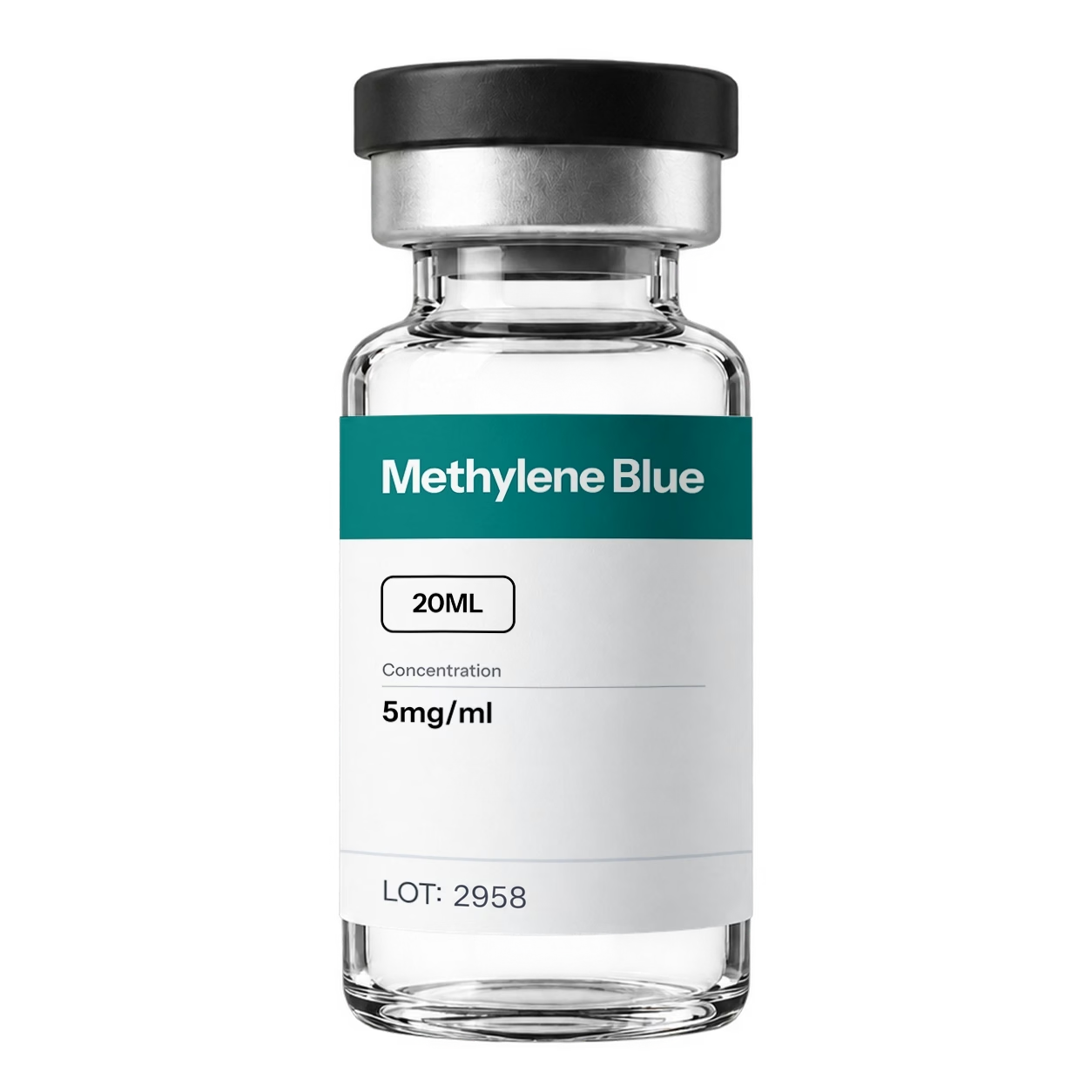
Methylene Blue

Methylthioninium chloride
CAS 61-73-4

Methylene blue (methylthioninium chloride), a phenothiazinium redox dye studied in mitochondrial and enzyme research. Supplied as a research reagent for in-vitro and preclinical work.

$49.99

Per 5 mg vial · excl. VAT · volume pricing from 5 units

Ships within 24 hours

Cold-packed from Leiden, tracked across the EU and UK.

Documentation included

HPLC and mass-spec tested. Batch CoAs coming soon.

Lot traceable

Every vial maps to a signed batch release record.

Specification

Compound monograph — Methylene Blue

Methylene blue (methylthioninium chloride) is a phenothiazinium dye with a long history as a histological stain and redox dye. In laboratory research, methylene blue has been studied as an alternative electron carrier that can pass electrons from NADH to cytochrome c in the mitochondrial electron transfer chain, and as an inhibitor of nitric oxide synthase and monoamine oxidase A in enzyme and tissue assays. Cell-culture and rodent studies have examined it in models of cellular senescence and neurodegeneration. Research Market supplies methylene blue as a research reagent with identity data for each lot on its certificate of analysis. It is sold strictly for laboratory research use.

Chemical structure and identification

  • Molecular formula: C16H18ClN3S
  • Molecular weight: 319.9 g/mol
  • CAS number: 61-73-4
  • PubChem CID: 6099
  • Synonyms: Methylthioninium chloride
  • Form: Physical form and fill are stated on the vial label and batch certificate of analysis
  • Analytical methods: HPLC for purity and mass spectrometry for identity, reported on the batch certificate of analysis

Research applications

  • Mitochondrial electron transfer: Reviewed for its ability to reroute electrons in the mitochondrial electron transfer chain directly from NADH to cytochrome c, with in-vitro and in-vivo work in animal models of stroke, cerebral ischemia, Alzheimer’s disease, Parkinson’s disease and traumatic brain injury [1]
  • Cellular senescence: In human IMR90 fibroblasts in culture, nanomolar methylene blue extended replicative life span by more than 20 population doublings, increased mitochondrial complex IV by 30% and raised cellular oxygen consumption by 37–70% [2]
  • Retinal ganglion cells: In primary rat retinal ganglion cells, methylene blue at 1 and 10 µM protected against rotenone, staurosporine and 72 hours of hypoxia, and increased cytochrome c oxidase activity in the presence of hydrogen peroxide [3]
  • Nitric oxide synthase: Formation of L-citrulline by purified NO synthase was completely inhibited by 30 µM methylene blue, while soluble guanylyl cyclase was far less sensitive, which the authors read as direct NOS inhibition [4]
  • Monoamine oxidase A: Kinetic assays with purified human MAO identified methylene blue as a tight-binding reversible inhibitor of MAO A, with MAO B inhibited only at much higher concentrations [5]

Reference citations

  1. Tucker D. et al. (2018). From mitochondrial function to neuroprotection-an emerging role for methylene blue. Mol Neurobiol, 55(6):5137–5153. PMID 28840449 · DOI
  2. Atamna H. et al. (2008). Methylene blue delays cellular senescence and enhances key mitochondrial biochemical pathways. FASEB J, 22(3):703–712. PMID 17928358 · DOI
  3. Daudt D.R. 3rd et al. (2012). Methylene blue protects primary rat retinal ganglion cells from cellular senescence. Invest Ophthalmol Vis Sci, 53(8):4657–4667. PMID 22661471 · DOI
  4. Mayer B. et al. (1993). Inhibition of nitric oxide synthesis by methylene blue. Biochem Pharmacol, 45(2):367–374. PMID 7679577 · DOI
  5. Ramsay R.R. et al. (2007). Methylene blue and serotonin toxicity: inhibition of monoamine oxidase A (MAO A) confirms a theoretical prediction. Br J Pharmacol, 152(6):946–951. PMID 17721552 · DOI

Compound data from PubChem CID 6099. Literature summaries describe published preclinical research and are not claims about this product’s effects in humans or animals.

Important regulatory notice

This product is supplied for laboratory research use only. It is not a medicinal product, is not intended for human or veterinary consumption, diagnostic use or any therapeutic application, and has not been evaluated or approved by the EMA, the FDA or any other regulatory authority. Purchase is restricted to qualified research professionals working in appropriately equipped facilities. The purchaser is responsible for ensuring compliance with all applicable national and institutional rules governing the acquisition, handling, storage and disposal of this material.

Research use only — not for human or veterinary consumption, and not a medicinal product.

Bulk & multi-site

Need 5 g or more? We quote per lot.

Volume pricing and custom fill sizes. Batch CoAs coming soon.

Search the Catalogue

Search by compound name, CAS number or SKU.