In stock
Research use only

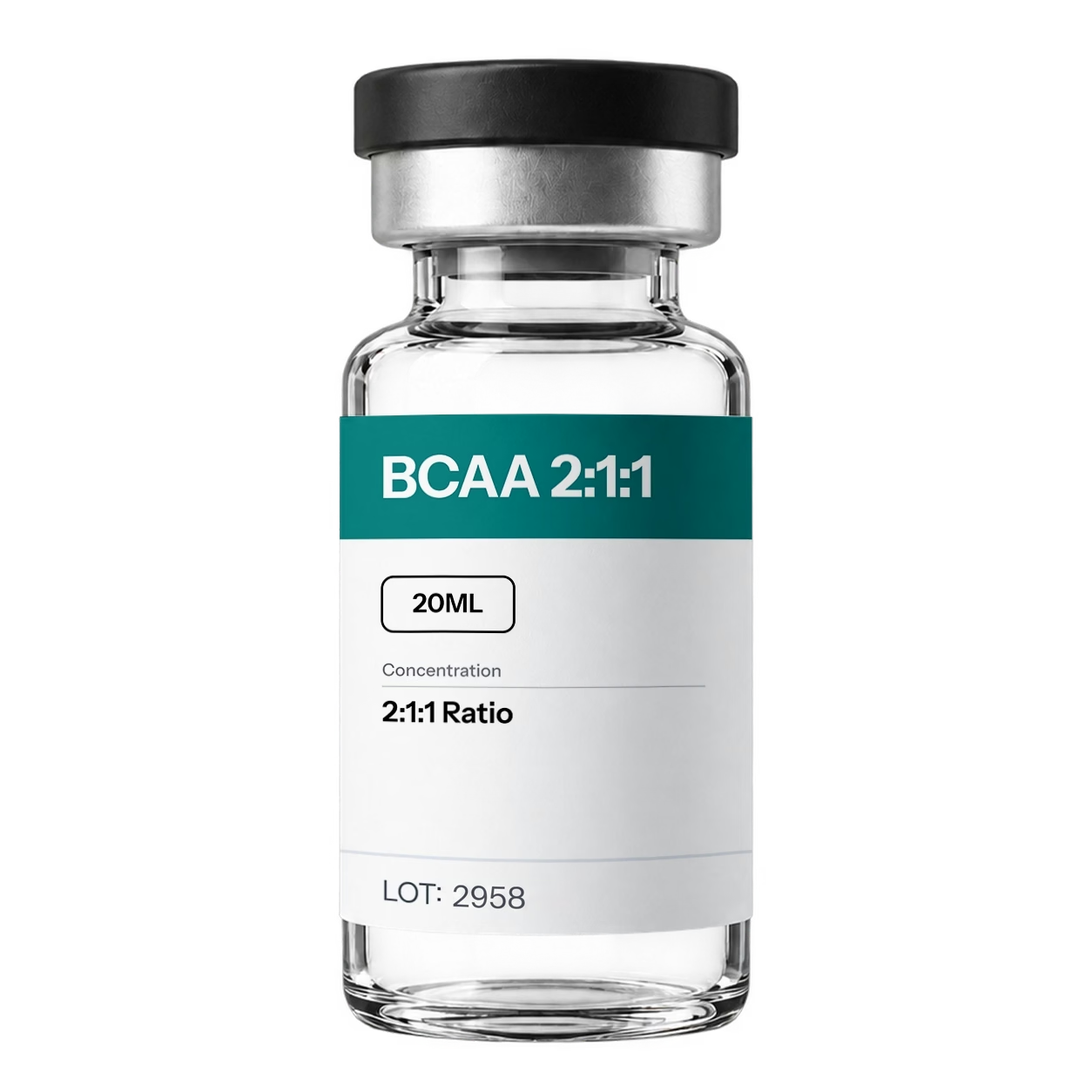
BCAA 2:1:1

Branched-chain amino acids

A branched-chain amino acid (BCAA) research material labeled in a 2:1:1 ratio. BCAAs are leucine, isoleucine and valine. Supplied in a sealed vial for laboratory research.

$29.99

Per 5 mg vial · excl. VAT · volume pricing from 5 units

Ships within 24 hours

Cold-packed from Leiden, tracked across the EU and UK.

Documentation included

HPLC and mass-spec tested. Batch CoAs coming soon.

Lot traceable

Every vial maps to a signed batch release record.

Specification

Compound monograph — BCAA 2:1:1

BCAA 2:1:1 is a branched-chain amino acid research material sold under a 2:1:1 ratio label. The branched-chain amino acids are leucine, isoleucine and valine, which share their first two catabolic enzymes, BCAT and the BCKDH complex. Researchers have studied leucine sensing by Sestrin2 upstream of mTORC1, BCKDH kinase regulation in rat liver, a valine catabolite that controls endothelial fatty acid transport in mice, and a 2:1:1 BCAA mixture in aged mice. Research Market supplies BCAA 2:1:1 with the lot composition and purity on the certificate of analysis. It is sold strictly for laboratory research use.

Composition

  • Branched-chain amino acids (BCAA), 2:1:1 ratio as stated in the product name

Components

  • Leucine: L-leucine. CAS 61-90-5; C6H13NO2; 131.17 g/mol; PubChem CID 6106
  • Isoleucine: L-isoleucine. CAS 73-32-5; C6H13NO2; 131.17 g/mol; PubChem CID 6306
  • Valine: L-valine. CAS 72-18-4; C5H11NO2; 117.15 g/mol; PubChem CID 6287
  • Form: Supplied in a sealed research vial
  • Analytical methods: Identity and purity data reported on the batch certificate of analysis

Research applications

  • BCAA catabolism: Reviewed for the shared transamination of leucine, isoleucine and valine by BCAT and oxidative decarboxylation of the resulting keto acids by BCKDH, and for links between aberrant BCAA metabolism and metabolic disorders [1]
  • Leucine sensing: Leucine, but not arginine, bound Sestrin2 with a dissociation constant of 20 μM and disrupted the Sestrin2–GATOR2 interaction, which was required for leucine to activate mTORC1 in cells [2]
  • BCKDH regulation: Reviewed for phosphorylation control of the BCKDH complex by BCKDH kinase, release of the kinase by the leucine transamination product α-ketoisocaproate, and lower kinase binding in rat liver after exercise and in cirrhosis [3]
  • Valine catabolite signaling: 3-Hydroxyisobutyrate, a catabolic intermediate of valine, was secreted from muscle cells, activated endothelial fatty acid transport and promoted muscle lipid accumulation in mice [4]
  • 2:1:1 mixtures in aged mice: A 2:1:1 BCAA mixture in drinking water, alone or with alanine or di-alanine, was studied for 12 weeks in 17-month-old C57BL/6J mice, with hind-limb torque, myofiber cross-sectional area and mTOR protein measured [5]

Reference citations

  1. Bo T. et al. (2024). Primary Roles of Branched Chain Amino Acids (BCAAs) and Their Metabolism in Physiology and Metabolic Disorders. Molecules, 30(1):56. PMID 39795113 · DOI
  2. Wolfson R.L. et al. (2016). Sestrin2 is a leucine sensor for the mTORC1 pathway. Science, 351(6268):43–48. PMID 26449471 · DOI
  3. Shimomura Y. et al. (2006). Branched-chain amino acid catabolism in exercise and liver disease. J Nutr, 136(1 Suppl):250S–253S. PMID 16365092 · DOI
  4. Jang C. et al. (2016). A branched-chain amino acid metabolite drives vascular fatty acid transport and causes insulin resistance. Nat Med, 22(4):421–426. PMID 26950361 · DOI
  5. Mantuano P. et al. (2023). Branched-Chain Amino Acids and Di-Alanine Supplementation in Aged Mice: A Translational Study on Sarcopenia. Nutrients, 15(2):330. PMID 36678201 · DOI

Compound data from PubChem CIDs 6106, 6306, 6287. Literature summaries describe published preclinical research and are not claims about this product’s effects in humans or animals.

Important regulatory notice

This product is supplied for laboratory research use only. It is not a medicinal product, is not intended for human or veterinary consumption, diagnostic use or any therapeutic application, and has not been evaluated or approved by the EMA, the FDA or any other regulatory authority. Purchase is restricted to qualified research professionals working in appropriately equipped facilities. The purchaser is responsible for ensuring compliance with all applicable national and institutional rules governing the acquisition, handling, storage and disposal of this material.

Research use only — not for human or veterinary consumption, and not a medicinal product.

Bulk & multi-site

Need 5 g or more? We quote per lot.

Volume pricing and custom fill sizes. Batch CoAs coming soon.

Search the Catalogue

Search by compound name, CAS number or SKU.