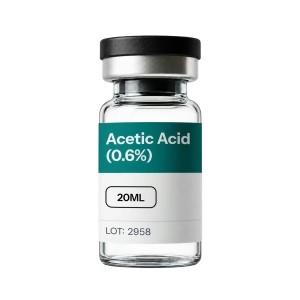
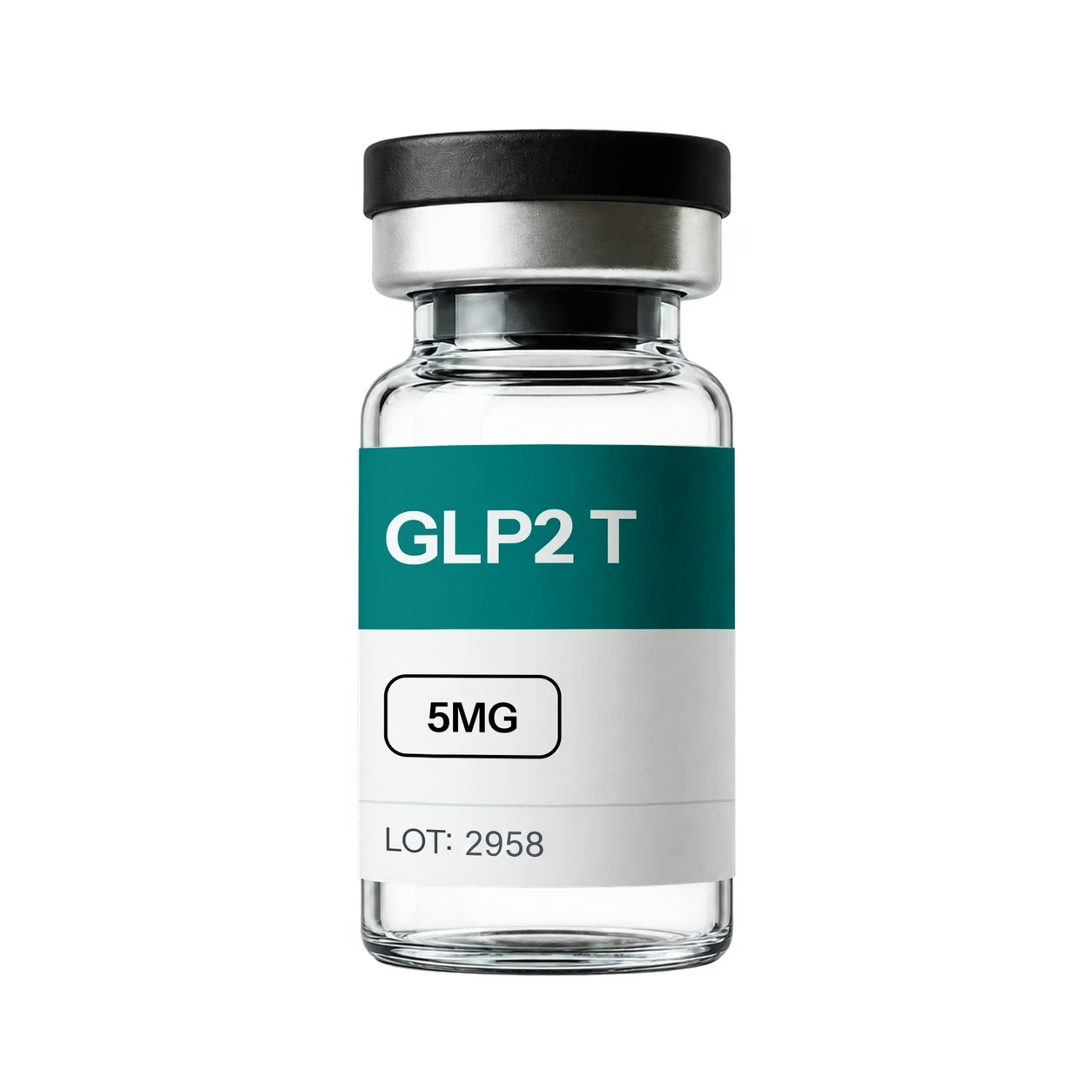
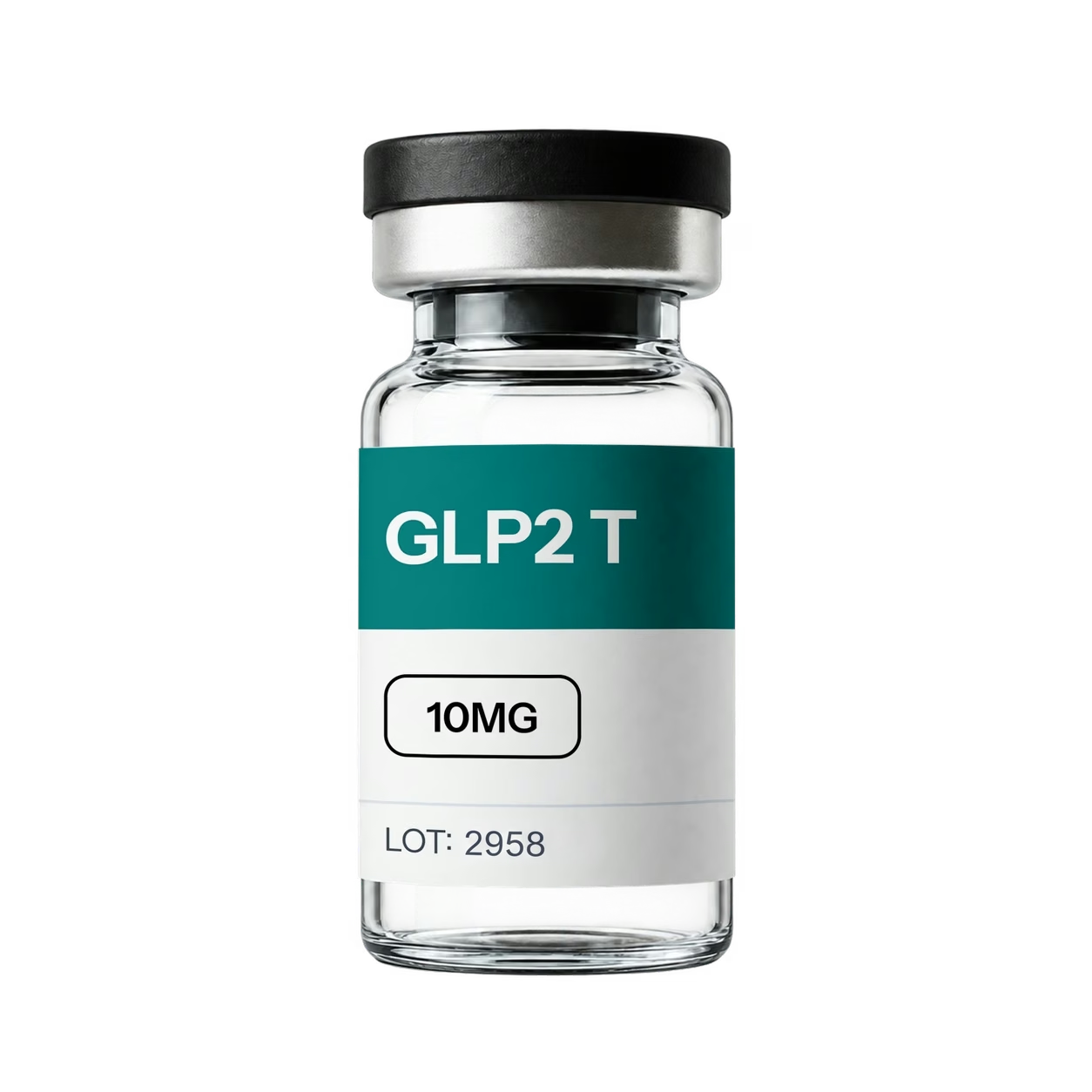
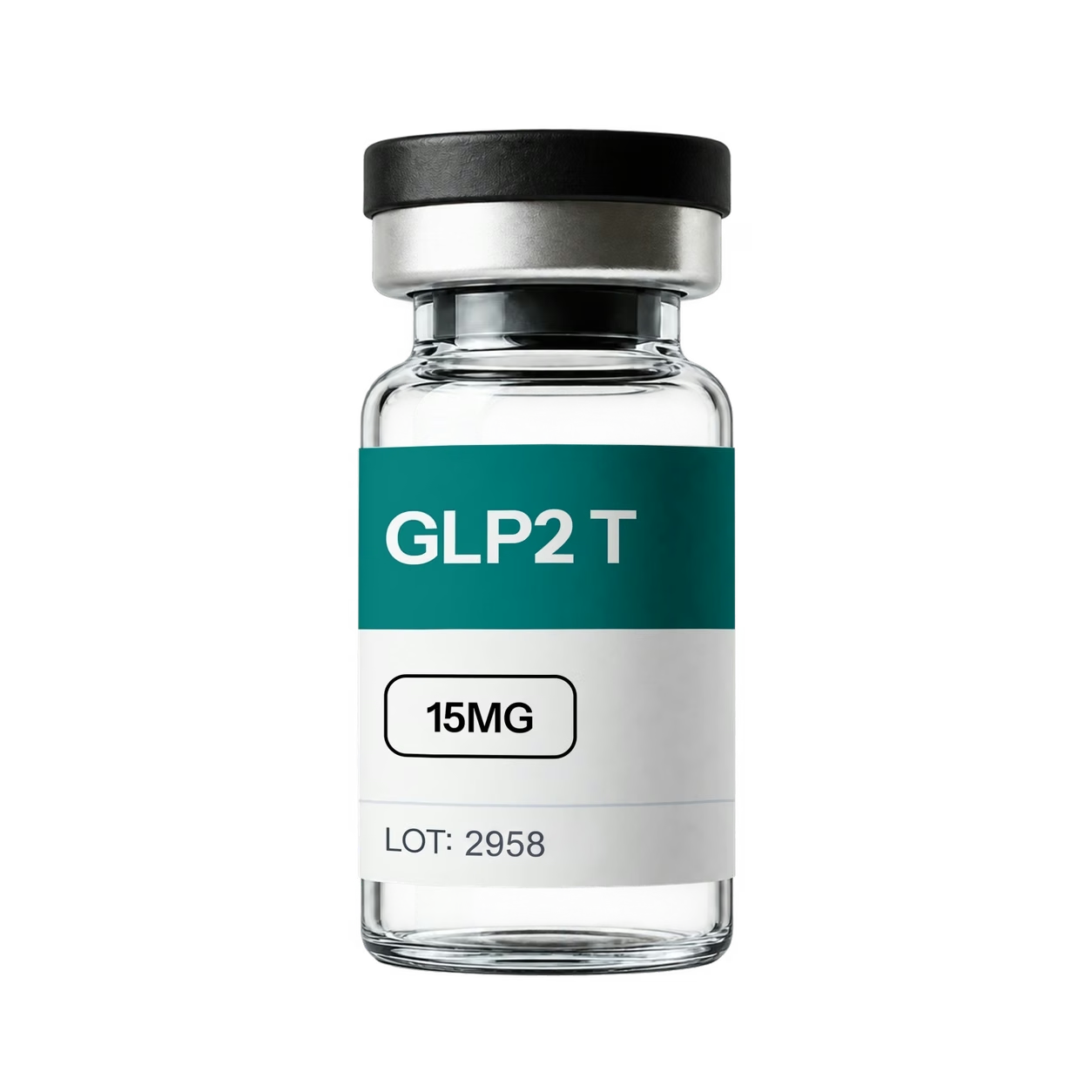
In stock
Research use only

GLP2 T

Dual GIP/GLP-1 receptor agonist analog
CAS 2023788-19-2

A synthetic dual GIP/GLP-1 receptor agonist peptide analog with a fatty diacid modification. Supplied as a lyophilized powder for in-vitro and preclinical research.

Price range: $124.99 through $299.99

Per 5 mg vial · excl. VAT · volume pricing from 5 units

Ships within 24 hours

Cold-packed from Leiden, tracked across the EU and UK.

Documentation included

HPLC and mass-spec tested. Batch CoAs coming soon.

Lot traceable

Every vial maps to a signed batch release record.

Specification

Compound monograph — GLP2 T

GLP2 T is a synthetic dual GIP/GLP-1 receptor agonist peptide analog: one fatty acid-modified peptide that activates both incretin receptors, the glucose-dependent insulinotropic polypeptide (GIP) receptor and the GLP-1 receptor. Preclinical work on this dual agonist class has examined incretin receptor signaling in cell lines, glucose-dependent insulin secretion and food intake in mice, and the ways GIP and GLP-1 receptor biology differ across islets, fat tissue and the hypothalamus. Research Market supplies the GLP2 T peptide in 5 mg, 10 mg and 15 mg vials, with purity and identity data for each lot reported on its certificate of analysis. It is sold strictly for laboratory research use.

Chemical structure and identification

  • Molecular formula: C225H348N48O68
  • Molecular weight: 4813 g/mol
  • CAS number: 2023788-19-2
  • PubChem CID: 166567236
  • Form: Lyophilized powder
  • Analytical methods: RP-HPLC for purity and mass spectrometry for identity, reported on the batch certificate of analysis

Research applications

  • Dual receptor pharmacology: In its discovery report, the fatty acid-modified dual agonist LY3298176 activated both GIP and GLP-1 receptor signaling in cell assays, and in mice it produced glucose-dependent insulin secretion and improved glucose tolerance by acting on both receptors [1]
  • Comparing the two incretins: GIP and GLP-1 both raise cAMP in pancreatic β-cells through their G protein-coupled receptors, while differing elsewhere: GIP enhances the postprandial glucagon response and GLP-1 suppresses it, and GIP but not GLP-1 promotes fat deposition in adipose tissue [2]
  • Hypothalamic GIP receptors: In Gipr-Cre knock-in mice, Gipr-expressing cells were located in the arcuate, dorsomedial and paraventricular hypothalamic nuclei, and chemogenetic activation of these cells suppressed food intake [3]
  • Incretin receptor mechanisms: Reviewed preclinical mechanisms that couple GLP-1 and GIP receptor signaling to islet hormone secretion, lipid metabolism, gut motility, appetite and immune function [4]
  • GIP receptor biology: Reviewed GIP’s metabolic effects outside the endocrine pancreas and the finding that both GIP receptor agonism and antagonism have been studied in obesity and diabetes pharmacology [5]

Reference citations

  1. Coskun T. et al. (2018). LY3298176, a novel dual GIP and GLP-1 receptor agonist for the treatment of type 2 diabetes mellitus: from discovery to clinical proof of concept. Mol Metab, 18:3–14. PMID 30473097 · DOI
  2. Seino Y. et al. (2010). GIP and GLP-1, the two incretin hormones: similarities and differences. J Diabetes Investig, 1(1-2):8–23. PMID 24843404 · DOI
  3. Adriaenssens A.E. et al. (2019). Glucose-dependent insulinotropic polypeptide receptor-expressing cells in the hypothalamus regulate food intake. Cell Metab, 30(5):987–996.e6. PMID 31447324 · DOI
  4. Campbell J.E. et al. (2013). Pharmacology, physiology, and mechanisms of incretin hormone action. Cell Metab, 17(6):819–837. PMID 23684623 · DOI
  5. Müller T.D. et al. (2025). Glucose-dependent insulinotropic polypeptide (GIP). Mol Metab, 95:102118. PMID 40024571 · DOI

Compound data from PubChem CID 166567236. Literature summaries describe published preclinical research and are not claims about this product’s effects in humans or animals.

Important regulatory notice

This product is supplied for laboratory research use only. It is not a medicinal product, is not intended for human or veterinary consumption, diagnostic use or any therapeutic application, and has not been evaluated or approved by the EMA, the FDA or any other regulatory authority. Purchase is restricted to qualified research professionals working in appropriately equipped facilities. The purchaser is responsible for ensuring compliance with all applicable national and institutional rules governing the acquisition, handling, storage and disposal of this material.

Research use only — not for human or veterinary consumption, and not a medicinal product.

Bulk & multi-site

Need 5 g or more? We quote per lot.

Volume pricing and custom fill sizes. Batch CoAs coming soon.

Search the Catalogue

Search by compound name, CAS number or SKU.