In stock
Research use only

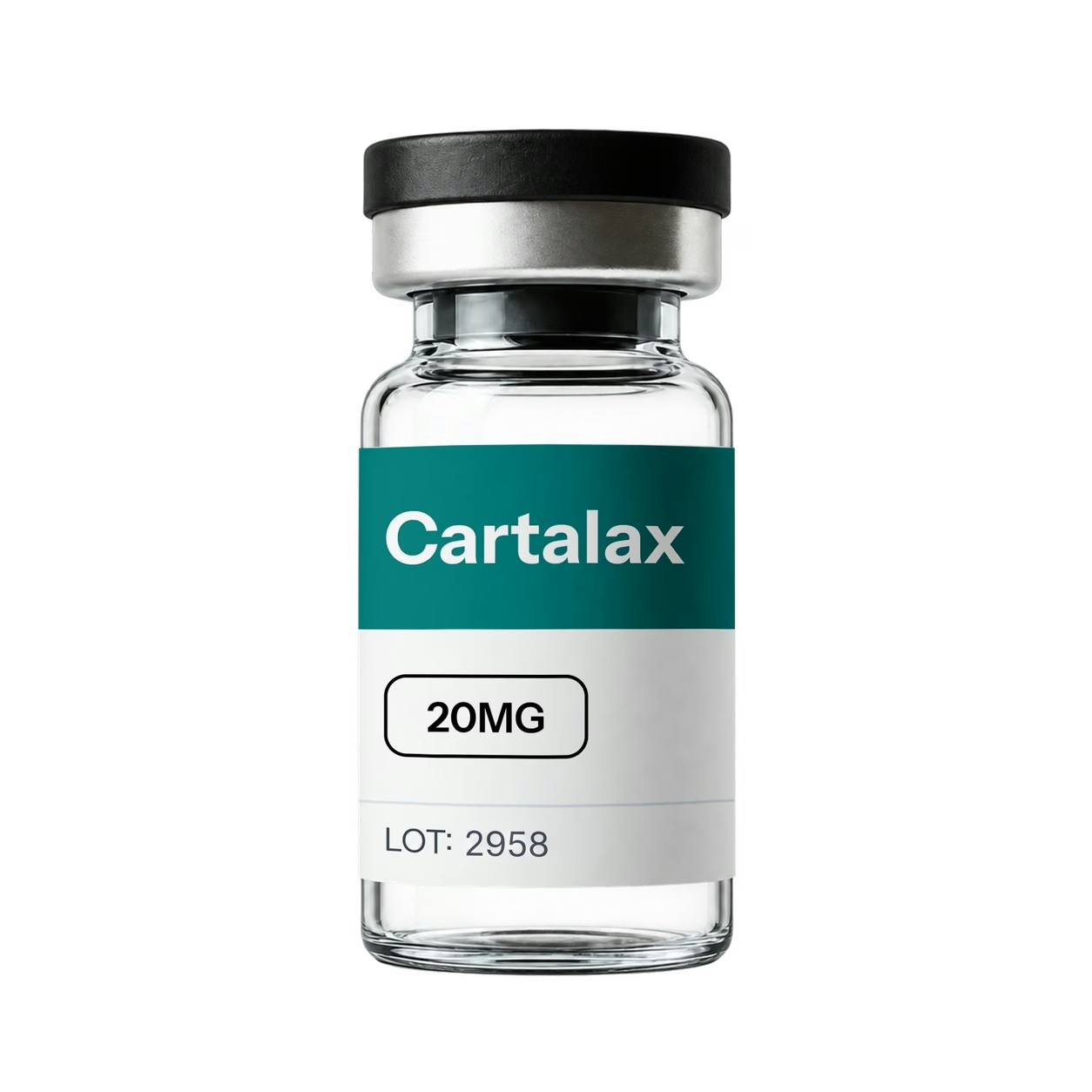
Cartalax

Tripeptide Ala-Glu-Asp (AED)
CAS 85806-95-7

A synthetic tripeptide, Ala-Glu-Asp (AED), from the Khavinson short peptide bioregulator series. Supplied as a lyophilized powder for in-vitro and preclinical research.

$64.99

Per 5 mg vial · excl. VAT · volume pricing from 5 units

Ships within 24 hours

Cold-packed from Leiden, tracked across the EU and UK.

Documentation included

HPLC and mass-spec tested. Batch CoAs coming soon.

Lot traceable

Every vial maps to a signed batch release record.

Specification

Compound monograph — Cartalax

Cartalax is the trade name for the synthetic tripeptide Ala-Glu-Asp (AED), listed in PubChem under the code T-31. It belongs to the short peptide bioregulators studied by Vladimir Khavinson’s group at the St. Petersburg Institute of Bioregulation and Gerontology. Published work on the Cartalax peptide is mostly cell culture: aging skin fibroblasts, mesenchymal stem cells and kidney tissue explants, with readouts such as Ki-67, MMP-9, sirtuins and p53. Research Market supplies Cartalax as a lyophilized research reagent, with purity and identity data for each lot reported on its certificate of analysis. It is sold strictly for laboratory research use.

Chemical structure and identification

  • Molecular formula: C12H19N3O8
  • Molecular weight: 333.29 g/mol
  • CAS number: 85806-95-7
  • PubChem CID: 87815447
  • Amino acid sequence: Ala-Glu-Asp (AED)
  • Synonyms: T-31 peptide; H-Ala-Glu-Asp-OH; L-alanyl-L-glutamyl-L-aspartic acid
  • Form: Lyophilized powder
  • Analytical methods: RP-HPLC for purity and mass spectrometry for identity, reported on the batch certificate of analysis

Research applications

  • Skin fibroblast aging: In human skin fibroblasts aged in culture, AED inhibited MMP-9 synthesis, raised expression of Ki-67 and CD98hc, and suppressed caspase-dependent apoptosis [1]
  • Sirtuins and collagen: In human skin fibroblasts during replicative aging, AED was reported to activate synthesis of sirtuin-1, sirtuin-6 and collagen I [2]
  • Mesenchymal stem cell gene expression: In two aging models of human embryonic bone marrow mesenchymal stem cells, AED, KED and KE at nanomolar concentrations raised IGF1 expression 3.5- to 5.6-fold and stimulated NFκB gene expression [3]
  • Kidney tissue culture: In organotypic kidney cultures from young and old rats, the T-31 (AED) peptide stimulated proliferation and reduced apoptosis, though less than a polypeptide complex isolated from calf kidney [4]
  • Senescence markers: In young and aged renal cell cultures, AED increased proliferation, lowered p16, p21 and p53 and raised SIRT-6 expression; docking models placed it in the DNA minor groove [5]

Reference citations

  1. Lin’kova N. et al. (2016). Peptide Regulation of Skin Fibroblast Functions during Their Aging In Vitro. Bull Exp Biol Med, 161(1):175–178. PMID 27259496 · DOI
  2. Fridman N. et al. (2020). Comparison of the Effects of KE and AED Peptides on Functional Activity of Human Skin Fibroblasts during Their Replicative Aging. Bull Exp Biol Med, 170(1):154–157. PMID 33231794 · DOI
  3. Ashapkin V. et al. (2020). Gene expression in human mesenchymal stem cell aging cultures: modulation by short peptides. Mol Biol Rep, 47(6):4323–4329. PMID 32399807 · DOI
  4. Chalisova N. et al. (2015). Peptide Regulation of Cells Renewal Processes in Kidney Tissue Cultures from Young and Old Animals. Bull Exp Biol Med, 159(1):124–127. PMID 26033601 · DOI
  5. Khavinson V. et al. (2014). [Tripeptides slow down aging process in renal cell culture]. Adv Gerontol, 27(4):651–656. PMID 25946838

Compound data from PubChem CID 87815447. Literature summaries describe published preclinical research and are not claims about this product’s effects in humans or animals.

Important regulatory notice

This product is supplied for laboratory research use only. It is not a medicinal product, is not intended for human or veterinary consumption, diagnostic use or any therapeutic application, and has not been evaluated or approved by the EMA, the FDA or any other regulatory authority. Purchase is restricted to qualified research professionals working in appropriately equipped facilities. The purchaser is responsible for ensuring compliance with all applicable national and institutional rules governing the acquisition, handling, storage and disposal of this material.

Research use only — not for human or veterinary consumption, and not a medicinal product.

Bulk & multi-site

Need 5 g or more? We quote per lot.

Volume pricing and custom fill sizes. Batch CoAs coming soon.

Search the Catalogue

Search by compound name, CAS number or SKU.