In stock
Research use only

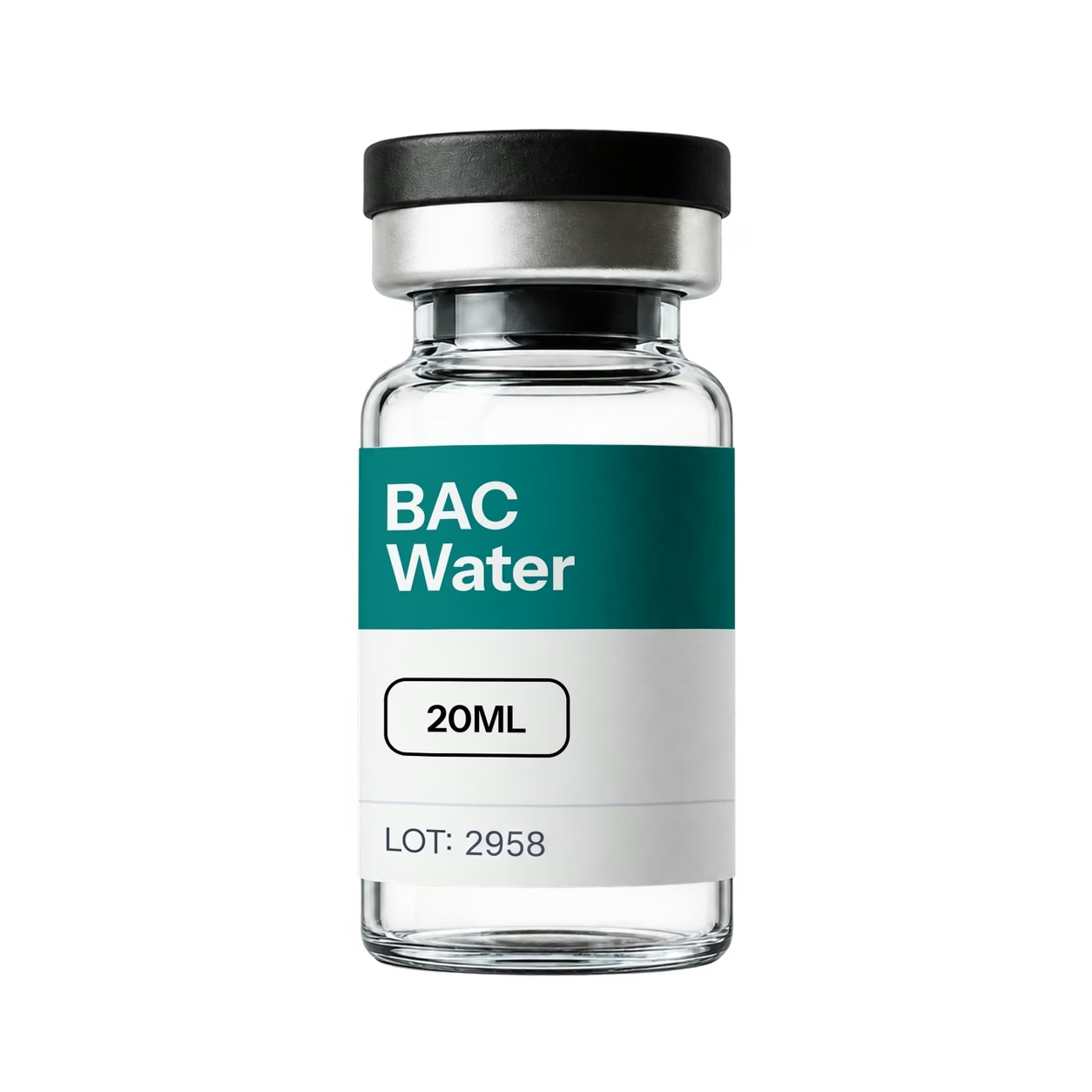
BAC Water

Bacteriostatic water (0.9% benzyl alcohol)

Bacteriostatic water: sterile water containing 0.9% benzyl alcohol as an antimicrobial preservative, used as a laboratory diluent for lyophilized research peptides.

$9.99

Per 5 mg vial · excl. VAT · volume pricing from 5 units

Ships within 24 hours

Cold-packed from Leiden, tracked across the EU and UK.

Documentation included

HPLC and mass-spec tested. Batch CoAs coming soon.

Lot traceable

Every vial maps to a signed batch release record.

Specification

Compound monograph — BAC Water

BAC Water (bacteriostatic water) is sterile water containing 0.9% (w/v) benzyl alcohol, an antimicrobial preservative that inhibits microbial growth in a container that is opened more than once. Laboratories use bacteriostatic water as a diluent for lyophilized peptide and protein research materials. Benzyl alcohol is one of several preservatives studied in peptide and protein formulations, and formulation research has examined when it does and does not promote aggregation of the dissolved material. Research Market supplies BAC Water as a laboratory reagent. It is sold strictly for laboratory research use.

Components

  • Benzyl alcohol, 0.9% (w/v): antimicrobial preservative; CAS 100-51-6; C7H8O; 108.14 g/mol; PubChem CID 244
  • Water: diluent
  • Form: Clear aqueous solution

Research applications

  • Reconstituting lyophilized proteins: Lyophilized recombinant interleukin-1 receptor antagonist reconstituted with 0.9% (w/v) benzyl alcohol aggregated more than when reconstituted with water, and the extent depended on how much native structure the protein kept during freeze-drying [1]
  • Preservative selection: Reviewed the antimicrobial preservatives used in protein and peptide formulations, their physico-chemical properties, compatibility with other excipients and packaging, and interactions with the dissolved biologic [2]
  • Peptide compatibility: In solution NMR studies of an acylated 31-residue peptide, benzyl alcohol did not induce aggregation or detectable interaction, whereas 1% (w/v) m-cresol produced insoluble aggregates [3]

Reference citations

  1. Roy S. et al. (2005). Effects of benzyl alcohol on aggregation of recombinant human interleukin-1-receptor antagonist in reconstituted lyophilized formulations. J Pharm Sci, 94(2):382–396. PMID 15614819 · DOI
  2. Stroppel L. et al. (2023). Antimicrobial preservatives for protein and peptide formulations: an overview. Pharmaceutics, 15(2):563. PMID 36839885 · DOI
  3. Li M. et al. (2022). Molecular mechanism of antimicrobial excipient-induced aggregation in parenteral formulations of peptide therapeutics. Mol Pharm, 19(9):3267–3278. PMID 35917158 · DOI

Compound data from PubChem CID 244 (benzyl alcohol). Literature summaries describe published preclinical research and are not claims about this product’s effects in humans or animals.

Important regulatory notice

This product is supplied for laboratory research use only. It is not a medicinal product, is not intended for human or veterinary consumption, diagnostic use or any therapeutic application, and has not been evaluated or approved by the EMA, the FDA or any other regulatory authority. Purchase is restricted to qualified research professionals working in appropriately equipped facilities. The purchaser is responsible for ensuring compliance with all applicable national and institutional rules governing the acquisition, handling, storage and disposal of this material.

Research use only — not for human or veterinary consumption, and not a medicinal product.

Bulk & multi-site

Need 5 g or more? We quote per lot.

Volume pricing and custom fill sizes. Batch CoAs coming soon.

Search the Catalogue

Search by compound name, CAS number or SKU.