In stock
Research use only

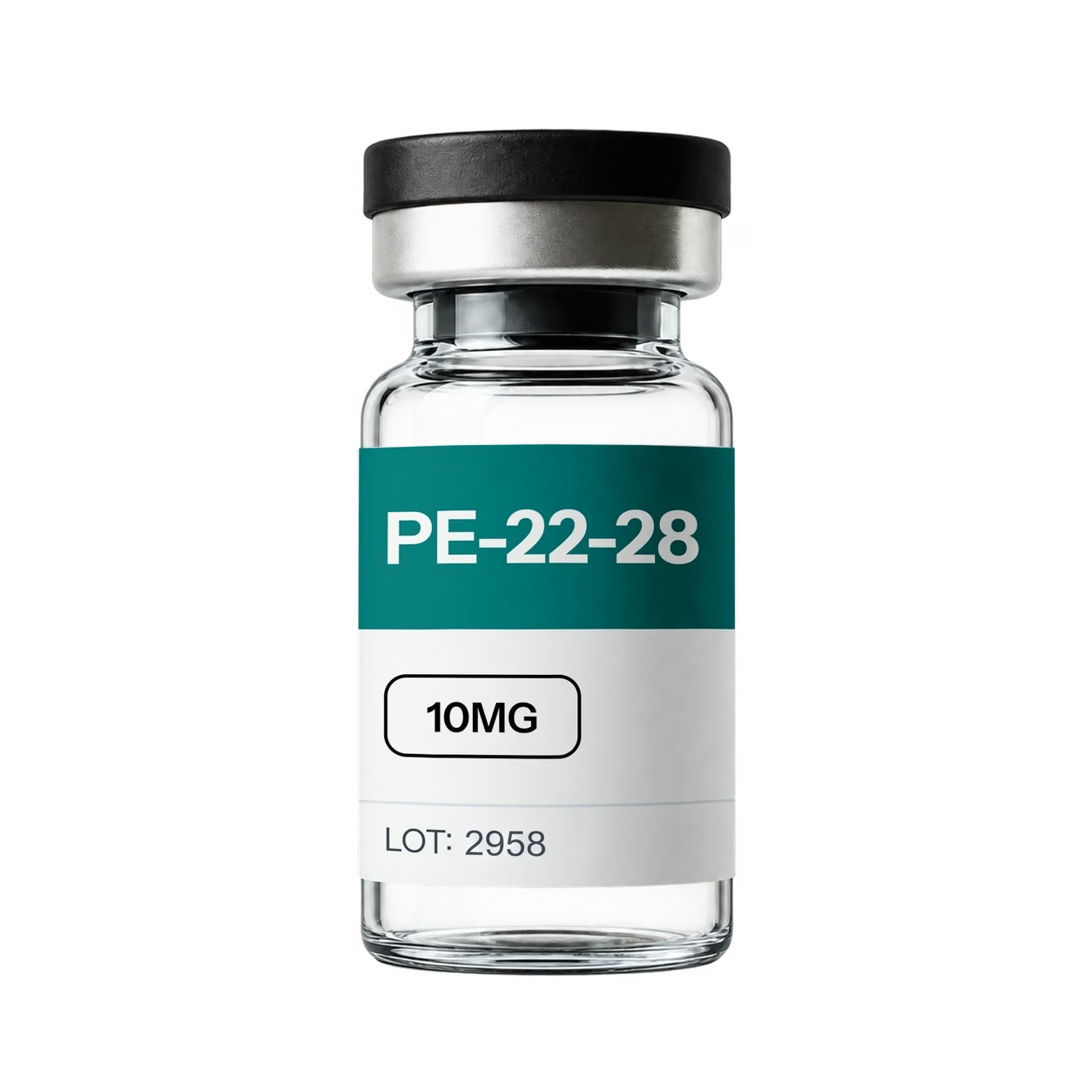
PE-22-28

Shortened spadin analog (TREK-1 peptide)
CAS 1801959-12-5

A synthetic 7-amino-acid peptide (GVSWGLR) designed from spadin, a sortilin-derived TREK-1 channel blocker. Supplied as a lyophilized powder for in-vitro and preclinical research.

$74.99

Per 5 mg vial · excl. VAT · volume pricing from 5 units

Ships within 24 hours

Cold-packed from Leiden, tracked across the EU and UK.

Documentation included

HPLC and mass-spec tested. Batch CoAs coming soon.

Lot traceable

Every vial maps to a signed batch release record.

Specification

Compound monograph — PE-22-28

PE-22-28 is a seven-residue peptide, Gly-Val-Ser-Trp-Gly-Leu-Arg, designed from the blood degradation products of spadin, a 17-amino-acid peptide derived from the propeptide of the neurotensin receptor 3 (NTSR3/sortilin). Like spadin, the PE-22-28 peptide blocks the two-pore domain potassium channel TREK-1, and researchers have compared its channel affinity, duration of action and effects on neurogenesis and synaptogenesis in mice with those of the parent peptide. Research Market supplies PE-22-28 as a lyophilized research reagent, with purity and identity data for each lot reported on its certificate of analysis. It is sold strictly for laboratory research use.

Chemical structure and identification

  • Molecular formula: C35H55N11O9
  • Molecular weight: 773.9 g/mol
  • CAS number: 1801959-12-5
  • PubChem CID: 165437303
  • Amino acid sequence: Gly-Val-Ser-Trp-Gly-Leu-Arg (GVSWGLR)
  • Synonyms: PE 22-28
  • Form: Lyophilized powder
  • Analytical methods: RP-HPLC for purity and mass spectrometry for identity, reported on the batch certificate of analysis

Research applications

  • TREK-1 inhibition: In patch-clamp recordings on hTREK-1/HEK cells, PE-22-28 inhibited TREK-1 with an IC50 of 0.12 nM, compared with 40 to 60 nM for spadin, and its action in vivo lasted up to 23 hours instead of 7 [1]
  • Neurogenesis and synaptogenesis: PE-22-28 and its analogs induced neurogenesis in mice after 4 days of treatment, increased PSD-95 expression in cortical neurons, and were studied in the forced swimming and novelty suppressed feeding tests [1]
  • Parent peptide pharmacology: Spadin bound TREK-1 with 10 nM affinity, blocked TREK-1 activity in cultured hippocampal neurons and brain slices, and increased 5-HT neuron firing in the dorsal raphe nucleus of mice [2]
  • Focal ischemia models: A shortened spadin analog, mini-spadin, had a biphasic effect on TREK-1 (activation at low doses, inhibition at higher doses) and was studied in a mouse model of focal ischemia and post-stroke depression-like behavior [3]
  • Analog design: Reviewed alongside retro-inverso, cyclized and shortened spadin analogs developed to increase TREK-1 inhibition and in vivo stability [4]

Reference citations

  1. Djillani A. et al. (2017). Shortened spadin analogs display better TREK-1 inhibition, in vivo stability and antidepressant activity. Front Pharmacol, 8:643. PMID 28955242 · DOI
  2. Mazella J. et al. (2010). Spadin, a sortilin-derived peptide, targeting rodent TREK-1 channels: a new concept in the antidepressant drug design. PLoS Biol, 8(4):e1000355. PMID 20405001 · DOI
  3. Pietri M. et al. (2019). First evidence of protective effects on stroke recovery and post-stroke depression induced by sortilin-derived peptides. Neuropharmacology, 158:107715. PMID 31325429 · DOI
  4. Djillani A. et al. (2019). Fighting against depression with TREK-1 blockers: past and future. A focus on spadin. Pharmacol Ther, 194:185–198. PMID 30291907 · DOI

Compound data from PubChem CID 165437303. Literature summaries describe published preclinical research and are not claims about this product’s effects in humans or animals.

Important regulatory notice

This product is supplied for laboratory research use only. It is not a medicinal product, is not intended for human or veterinary consumption, diagnostic use or any therapeutic application, and has not been evaluated or approved by the EMA, the FDA or any other regulatory authority. Purchase is restricted to qualified research professionals working in appropriately equipped facilities. The purchaser is responsible for ensuring compliance with all applicable national and institutional rules governing the acquisition, handling, storage and disposal of this material.

Research use only — not for human or veterinary consumption, and not a medicinal product.

Bulk & multi-site

Need 5 g or more? We quote per lot.

Volume pricing and custom fill sizes. Batch CoAs coming soon.

Search the Catalogue

Search by compound name, CAS number or SKU.