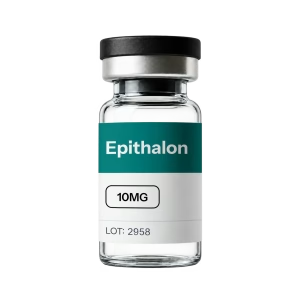
In stock
Research use only

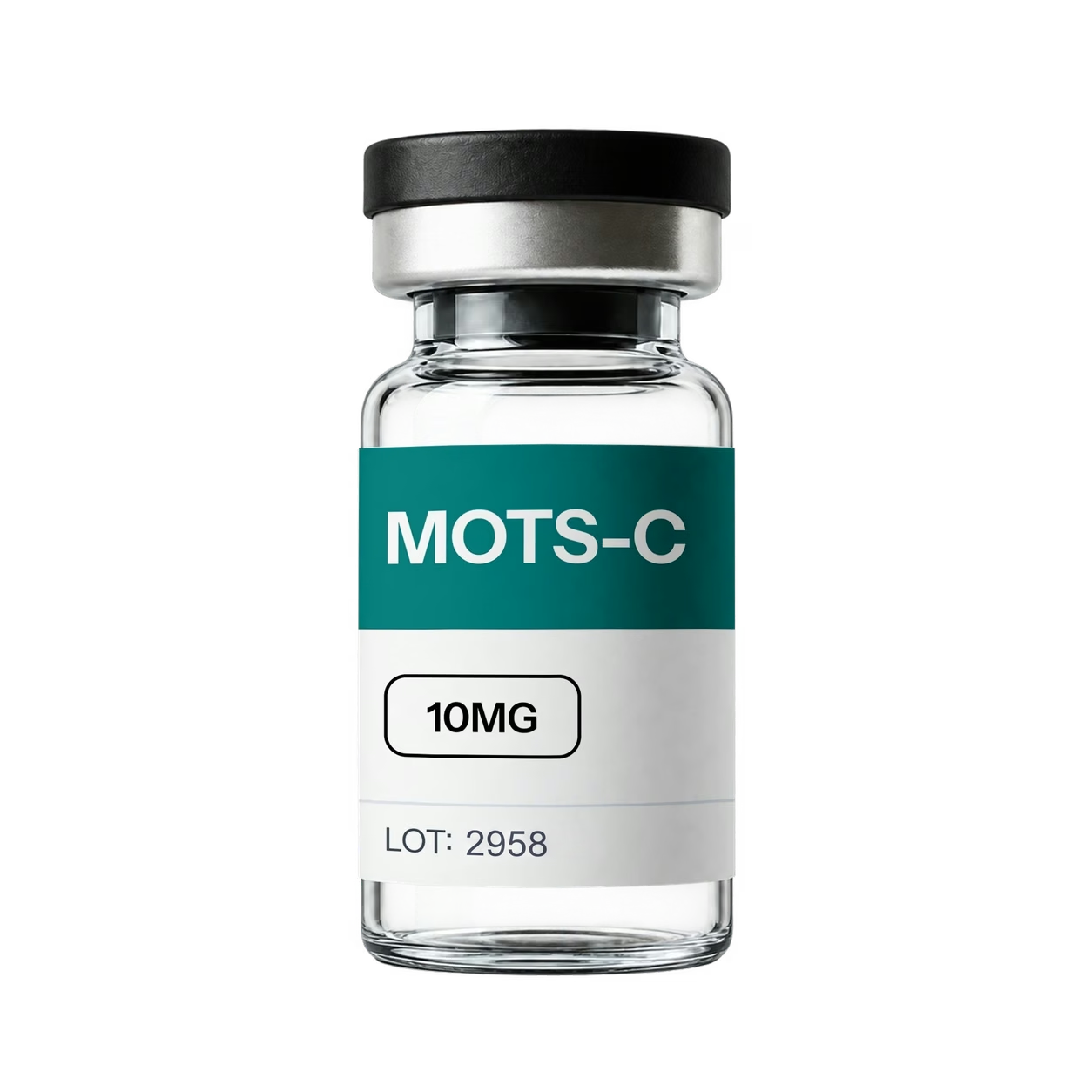
MOTS-C

Mitochondrial-derived peptide
CAS 1627580-64-6

A 16-amino-acid peptide encoded by a short open reading frame in the mitochondrial 12S rRNA gene. Supplied as a lyophilized powder for in-vitro and preclinical research.

$54.99

Per 5 mg vial · excl. VAT · volume pricing from 5 units

Ships within 24 hours

Cold-packed from Leiden, tracked across the EU and UK.

Documentation included

HPLC and mass-spec tested. Batch CoAs coming soon.

Lot traceable

Every vial maps to a signed batch release record.

Specification

Compound monograph — MOTS-C

MOTS-c (mitochondrial open reading frame of the 12S rRNA type-c) is a 16-amino-acid peptide encoded within mitochondrial DNA, one of a small group of mitochondrial-derived peptides. Preclinical research on the MOTS-c peptide has examined its inhibition of the folate cycle and resulting AMPK activation, insulin sensitivity in high-fat-fed and aging mice, physical capacity in old mice, muscle atrophy after limb immobilization, and direct binding to the protein kinase CK2. Research Market supplies MOTS-c with purity and identity data for each lot reported on its certificate of analysis. It is sold strictly for laboratory research use.

Chemical structure and identification

  • Molecular formula: C101H152N28O22S2
  • Molecular weight: 2174.6 g/mol
  • CAS number: 1627580-64-6
  • PubChem CID: 146675088
  • Amino acid sequence: Met-Arg-Trp-Gln-Glu-Met-Gly-Tyr-Ile-Phe-Tyr-Pro-Arg-Lys-Leu-Arg (MRWQEMGYIFYPRKLR)
  • Synonyms: Mitochondria-derived peptide MOTS-c
  • Form: Lyophilized powder
  • Analytical methods: RP-HPLC for purity and mass spectrometry for identity, reported on the batch certificate of analysis

Research applications

  • Discovery and metabolic signaling: Identified as a peptide encoded by a short open reading frame in the mitochondrial 12S rRNA; its cellular actions inhibited the folate cycle and de novo purine biosynthesis, leading to AMPK activation, with skeletal muscle as its apparent primary target organ [1]
  • Aging and physical capacity: MOTS-c treatment was reported to increase physical performance in young, middle-aged and old mice and to regulate nuclear genes related to metabolism and proteostasis; in humans, exercise induced endogenous MOTS-c expression [2]
  • CK2 as a direct target: MOTS-c bound and activated the kinase CK2 in cell-free systems, and its effects on muscle glucose uptake and atrophy in mice were blunted when CK2 activity was suppressed; the natural K14Q variant bound CK2 poorly [3]
  • Immobilization-induced atrophy: In mice with a cast-immobilized limb, MOTS-c treatment was associated with smaller muscle mass loss, normalized AKT and FOXO phosphorylation, lower circulating inflammatory cytokines and lower muscle fatty acid levels [4]

Reference citations

  1. Lee C. et al. (2015). The mitochondrial-derived peptide MOTS-c promotes metabolic homeostasis and reduces obesity and insulin resistance. Cell Metab, 21(3):443–454. PMID 25738459 · DOI
  2. Reynolds J.C. et al. (2021). MOTS-c is an exercise-induced mitochondrial-encoded regulator of age-dependent physical decline and muscle homeostasis. Nat Commun, 12(1):470. PMID 33473109 · DOI
  3. Kumagai H. et al. (2024). MOTS-c modulates skeletal muscle function by directly binding and activating CK2. iScience, 27(11):111212. PMID 39559755 · DOI
  4. Kumagai H. et al. (2024). Mitochondrial-derived microprotein MOTS-c attenuates immobilization-induced skeletal muscle atrophy by suppressing lipid infiltration. Am J Physiol Endocrinol Metab, 326(3):E207–E214. PMID 38170165 · DOI

Compound data from PubChem CID 146675088. Literature summaries describe published preclinical research and are not claims about this product’s effects in humans or animals.

Important regulatory notice

This product is supplied for laboratory research use only. It is not a medicinal product, is not intended for human or veterinary consumption, diagnostic use or any therapeutic application, and has not been evaluated or approved by the EMA, the FDA or any other regulatory authority. Purchase is restricted to qualified research professionals working in appropriately equipped facilities. The purchaser is responsible for ensuring compliance with all applicable national and institutional rules governing the acquisition, handling, storage and disposal of this material.

Research use only — not for human or veterinary consumption, and not a medicinal product.

Bulk & multi-site

Need 5 g or more? We quote per lot.

Volume pricing and custom fill sizes. Batch CoAs coming soon.

Search the Catalogue

Search by compound name, CAS number or SKU.