In stock
Research use only

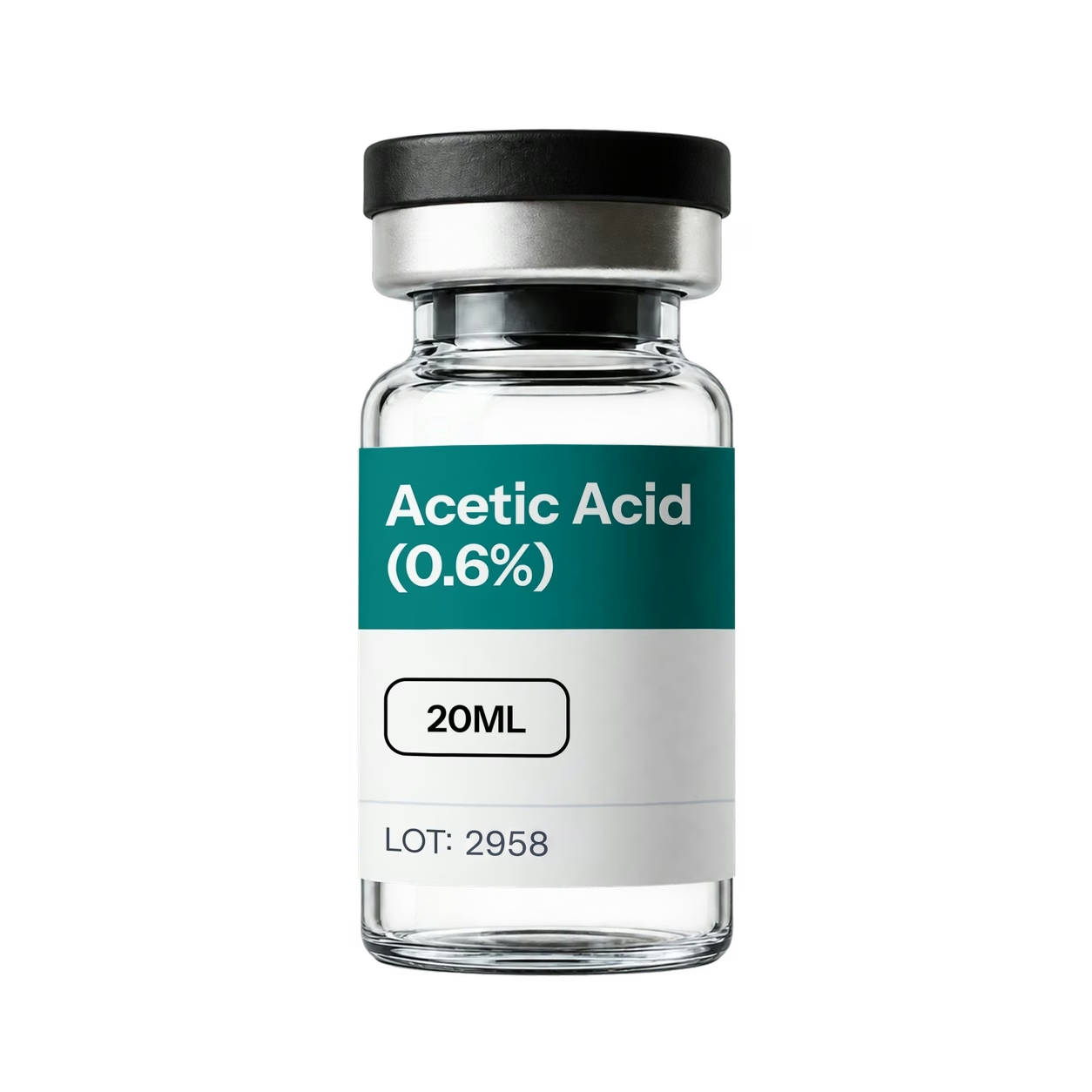
Acetic Acid (0.6%)

Acetic acid, 0.6% aqueous solution
CAS 64-19-7

A dilute 0.6% aqueous solution of acetic acid, used as a laboratory solvent and diluent for lyophilized research peptides.

$9.99

Per 5 mg vial · excl. VAT · volume pricing from 5 units

Ships within 24 hours

Cold-packed from Leiden, tracked across the EU and UK.

Documentation included

HPLC and mass-spec tested. Batch CoAs coming soon.

Lot traceable

Every vial maps to a signed batch release record.

Specification

Compound monograph — Acetic Acid (0.6%)

Acetic Acid (0.6%) is a dilute aqueous solution of acetic acid, the two-carbon carboxylic acid with a pKa of about 4.5. Dilute acetic acid appears in peptide laboratory work in several roles: acetate is a common counter-ion for synthetic peptides, often exchanged in place of the trifluoroacetate left by purification, and boiling acetic acid has been used to extract neuropeptides from tissue for radioimmunoassay. Research Market supplies 0.6% acetic acid as a ready-made laboratory reagent for dissolving and diluting lyophilized research peptides. It is sold strictly for laboratory research use.

Chemical structure and identification

  • Molecular formula: C2H4O2
  • Molecular weight: 60.05 g/mol
  • CAS number: 64-19-7
  • PubChem CID: 176
  • Concentration: 0.6% acetic acid in water
  • Form: Clear aqueous solution

Research applications

  • Peptide counter-ion exchange: Approaches for replacing the trifluoroacetate counter-ion of a synthetic cationic peptide, including reverse-phase HPLC and ion-exchange resin, allowed partial to almost complete exchange to the counter-ion of a weaker acid such as acetic acid (pKa 4.5) [1]
  • Counter-ion effects in cell culture: Trifluoroacetate at 10-8 to 10-7 M reduced cell numbers in fetal rat osteoblast and chondrocyte cultures, and the TFA salts of amylin and calcitonin gave less proliferation than the hydrochloride salts, leading the authors to recommend converting peptides to a hydrochloride or biologically equivalent salt [2]
  • Peptide extraction: Among four methods compared for extracting substance P, neurokinin A and CGRP from human dental pulp, boiling the tissue in acetic acid gave the highest overall yield [3]

Reference citations

  1. Roux S. et al. (2008). Elimination and exchange of trifluoroacetate counter-ion from cationic peptides: a critical evaluation of different approaches. J Pept Sci, 14(3):354–359. PMID 18035848 · DOI
  2. Cornish J. et al. (1999). Trifluoroacetate, a contaminant in purified proteins, inhibits proliferation of osteoblasts and chondrocytes. Am J Physiol, 277(5):E779–E783. PMID 10567002 · DOI
  3. Awawdeh L. et al. (1999). A comparison of four extraction methods for substance P, neurokinin A and calcitonin gene-related peptide from human dental pulp tissue. Arch Oral Biol, 44(12):999–1004. PMID 10669077 · DOI

Compound data from PubChem CID 176. Literature summaries describe published preclinical research and are not claims about this product’s effects in humans or animals.

Important regulatory notice

This product is supplied for laboratory research use only. It is not a medicinal product, is not intended for human or veterinary consumption, diagnostic use or any therapeutic application, and has not been evaluated or approved by the EMA, the FDA or any other regulatory authority. Purchase is restricted to qualified research professionals working in appropriately equipped facilities. The purchaser is responsible for ensuring compliance with all applicable national and institutional rules governing the acquisition, handling, storage and disposal of this material.

Research use only — not for human or veterinary consumption, and not a medicinal product.

Bulk & multi-site

Need 5 g or more? We quote per lot.

Volume pricing and custom fill sizes. Batch CoAs coming soon.

Search the Catalogue

Search by compound name, CAS number or SKU.